

How to Market Your Art to Unexpected Audiences
How to Market Your Art to Unexpected Audiences
A practical system for artists
This system is written in collaboration between Andrea Dell (Andrea Dell Art) and Steve Drury (web-aviso).
The artwork used as the example sold at Liverpool Art Fair in 2025
How to Find Unexpected Audiences for Your Art
Most artists stop at the obvious: “My audience is people who love art or interiors.” But some of the most committed, values-aligned collectors are not searching for 'art' at all, they are searching for calm, focus, emotional safety, or meaning in their spaces. (Read that again!)
I call these 'unexpected audiences' - these are people and professions who 'use art as a tool, not just decoration'. In this guide, I’ll share a creative system that my marketing company, web-aviso, introduced me to, and that I often use and have refined at Andrea Dell Art, to find and market my work to those audiences. By following this you can apply the same process to your portfolio.
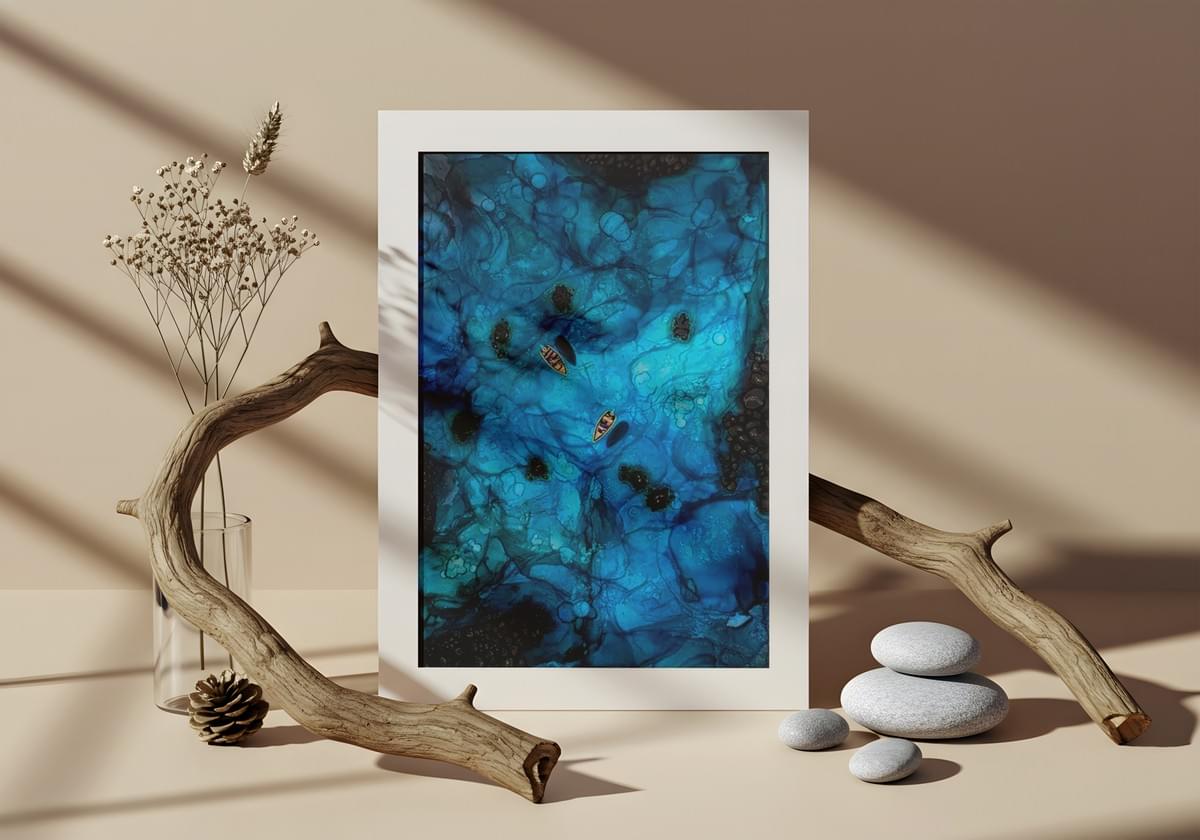
'Ocean Serenity' by Andrea Dell
We'll use my piece 'Ocean Serenity', (featured above) as a working example for this guide.
Step 1: Start With One Artwork
Begin with a single piece instead of your whole body of work.
This keeps the process concrete and repeatable.
We'll use my piece Oceanic Serenity, an abstract, bird's eye perspective, ocean scene with layered blues and tiny boats. The obvious audience is clear: homeowners or interior designers who want calming, coastal inspired wall art for living rooms or bedrooms.
For your art, begin by writing down:
• Title of the piece
• Visual elements (colour, movement, subject)
• Emotional tone (calm, stormy, hopeful, introspective)
So you’ve just defined the 'surface level' market. Now we go deeper ...
Step 2: Identify 1–2 Unexpected Audiences
Ask: “Who else uses this mood as a tool in their work or environment?”
With Oceanic Serenity and my broader themes (ocean, underwater, rain, maps, mindfulness, mandalas, feminine faces, even jewellery), I identified two strong unexpected audiences:
Therapists and Wellness Practitioners
Why this fits:
• Calm blues and fluid motion support nervous system regulation in therapy rooms, coaching spaces and bodywork studios.
• My real life story of mindfulness art workshops and 'art for the soul' builds trust with mental health and wellbeing professionals.
Here, the painting stops being considered coastal décor and becomes part of how practitioners hold space for clients.
Marine / Ocean Focused Nonprofits and Educators
Why this fits:
• Strong ocean narrative across my portfolio: boats, whales, dolphins, reefs, and ocean themed imagery.
• These organisations need beautiful visuals for offices, donor lounges, event backdrops and fundraising auctions that align with their mission.
Your own unexpected audiences might be: yoga studios, boutique hotels, HR teams, mindfulness apps, parenting communities, or niche hobby groups linked to your themes. Look on social media for inspiration on groups or query an AI platform (Google Gemini, ChatGPT or Perplexity for example).
Step 3: Craft a Tailored Marketing Angle
Once you know the audience, create a specific angle that links your art to their work.
For therapists and wellness practitioners, my core angle is: 'Art as a Co Therapist'. I position the artwork as a quiet co facilitator in a counselling or coaching room:
• It regulates the nervous system: soft blues, organic lines or soothing compositions help clients feel safer and more grounded.
• It holds space for big emotions: metaphors such as sea, storms, and rain give clients something external to project onto and talk about.
• It signals brand values: intentional art suggests care, professionalism and a gentle, human centred approach.
If this gels with your style, here's an anchor 'benefit line' you can adapt: 'Art that helps your clients exhale before the session even begins.'
Do this for each audience: one sentence that clearly states how your art helps them do their job, express their values, or support their clients.
Step 4: Use a Tailored Social Media Post
Here’s a 'fill in the blanks post' you can adapt for your own work and audience ...
Post idea for therapists & coaches
If you’re a therapist, coach or wellness practitioner, you probably think a lot about how you hold space for people.
One thing I’ve learned, both from the sea and from my mindfulness based art practice, is that our environment quietly does half the talking for us.
Pieces like [YOUR ARTWORK TITLE]” are created to feel like a deep breath: [describe colours], [describe movement] and small human moments surrounded by something larger. Clients often tell me they see their own stories in these scenes – storms passing, finding calmer waters, feeling held.
If you’re curating your practice space and want artwork that supports nervous system safety as much as it beautifies the room, I’d love to chat about commissions or existing pieces that could be a fit for your waiting area or therapy room.
Send me a message with a photo of your space and I can suggest 1–2 pieces that would create the mood you want your clients to feel when they walk in.
By altering the the tone too, e.g., more clinical for psychologists, or more spiritual for holistic therapists and coaches, you open the possibilities of how the art may 'feel' too. You may find this a catalyst that gives greater clarity. By revisiting the first steps again with a fresh approach, you may reveal more unexpected audiences!
Step 5: Go Where Your Unexpected Audiences Already Are
Instead of only posting on your own feed, take your message into groups, spaces and communities where your unexpected audiences are already talking.
Example search phrases for Facebook & LinkedIn
Therapists and wellness practitioners:
• 'Private Practice Therapists'
• 'Therapists in Private Practice UK'
• 'Counsellors and Psychotherapists'
• 'Therapy Office Decor' / 'Therapy Room Ideas'
• 'Holistic Therapists UK'
• 'Wellness Entrepreneurs'
• 'Life Coaches Community'
• 'Mindfulness Teachers'
• 'Art Therapy Network'
What to look for:
• Posts with room or office photos
• Threads about 'setting up my first practice,' 'therapy room décor,' 'reception area,' 'client comfort'
How to show up:
• Start by commenting thoughtfully (no links) on posts about space, atmosphere and client comfort.
• Share 1–2 images of your work with a short story about how you created a feeling or mood.
• After you’ve engaged for a while, share your tailored post in groups that allow promotions (often on specific promo days).
Step 6: Two More Example 'Unexpected Audiences'
Now run the same process with other pieces in your portfolio.
Corporate teams who care about mental health and focus
Angle: 'Art designed to take the 'interrogation' out of the conference room.'
Where to look:
• LinkedIn groups: 'People & Culture,' 'HR Professionals UK,' 'Workplace Wellbeing'
• Co working spaces, boutique offices, small law or consulting firms that want an internal wellbeing story, not just generic prints.
Ocean Loving Parents and Emotional Literacy
Angle: 'Art that helps kids talk about feelings, and a courage to explore.'
Where to look:
• Facebook groups: 'Gentle Parenting,' 'Conscious Parenting,' 'Montessori Homeschool UK,' 'Ocean / Sea Lovers'
• Local parent groups in your area and school or community newsletters.
Step 7: Systemise Your 'Unexpected Audience' Marketing
Turn this into a simple, repeatable system:
1. Pick a work.
2. Note its mood (calm, energetic, mysterious) and elements (boats, jellyfish, rain, maps, mandalas, figures, symbols).
3. Ask: “Who else uses this mood as a tool?”
o e.g. therapists, yoga teachers, HR teams, interior designers, boutique hotels, ocean NGOs, mindfulness apps, gift box companies, jewellery lovers who value ‘meaning’.
4. Write one sentence of value for each audience.
o “This helps your clients feel X.”
o “This supports your brand story about Y.”
5. Create one tailored post + 5 search terms or hashtags for each audience and schedule them over a month.womenofillustration+1
Do this for even 3–5 pieces and you will have an entire year’s worth of focused, audience specific marketing content.
Call to Action for Artists (Secret Offer!)
If you’d like more guidance on finding hidden buyers for your work, get in touch with web-aviso. They specialise in AI engineering to accelerate research and online presence optimisation, but every audit, strategy and asset is shaped with human oversight and creative judgement.
They are offering discounted 1:1 sessions (if you mention my name or website) where you can walk through your portfolio together, identify 2–3 unexpected audiences for a piece/s, and shape language you can use in your posts, emails and website.
Send them a message on 07767 343152 or get in touch via their contact page to book a session
Sources
Frequently Asked Questions
How to Market Your Art to Unexpected Audiences
What is an 'unexpected audience' for artists?
An unexpected audience is any group outside traditional art buyers who use art to support wellbeing, communication, learning or brand values, such as therapists, educators, HR teams or wellness brands.
Why is marketing to unexpected audiences effective?
These audiences often have specific emotional or environmental needs and budgets allocated to improving spaces, so they value art that clearly supports their goals.
How do I find unexpected audiences for my art?
Start from your themes and moods, then search for related communities on platforms like Facebook and LinkedIn, using relevant and related keywords and kephrases, e.g., 'therapy room decor,' 'workplace wellbeing' or 'mindful parenting.'
What type of content works best for these audiences?
Story driven content that explains how your art helps their clients, teams or families feel (calm, focused, safe, inspired) tends to perform better than generic 'new artwork for sale' posts.
Do I need separate social posts for each audience?
Yes, even small tweaks make a big difference; tailor language, examples and calls to action so each audience feels you are speaking directly to their world.
Which hashtags help reach new art buyers?
Mix art, theme and audience hashtags, e.g. #MindfulArt, #ArtForTherapists, #WellbeingArt, #OceanInspiredArt, #TherapyRoomDecor, #WorkplaceWellbeing, #GentleParenting, #ArtForHealing. Before you use them in your own post however - search for which results come up. Do they seem relevant, or can you see your art filling this niche?
Can I use the same artwork for multiple audiences?
Absolutely, one piece can serve a therapy practice, a corporate wellbeing space and a mindful home, as long as you adjust the story, angle and language for each group.